How Often Should You Really Clean Your Curtains?
Curtain cleaning is one of those household jobs with no obvious prompt. Carpets look grubby, windows streak, bathrooms announce themselves — but curtains fade into the background and quietly collect whatever the room throws at them. The honest answer to how often they need cleaning is that it depends on the room, the fabric, the household and the street outside. What follows is a practical way to work out the right interval for your own home, rather than a number pulled out of thin air.
There Is No Single Correct Interval
Most advice settles on "every six months" or "once a year" and leaves it there. The trouble is that a sheer panel in a spare bedroom and a lined drape above a kitchen bench live completely different lives. One collects a light film of dust; the other absorbs cooking oil, steam and odour every night of the week. Frequency should follow exposure, not the calendar. Put every curtain in the house on one schedule and you will over-service some and badly neglect others.
Two Different Jobs, Two Different Rhythms
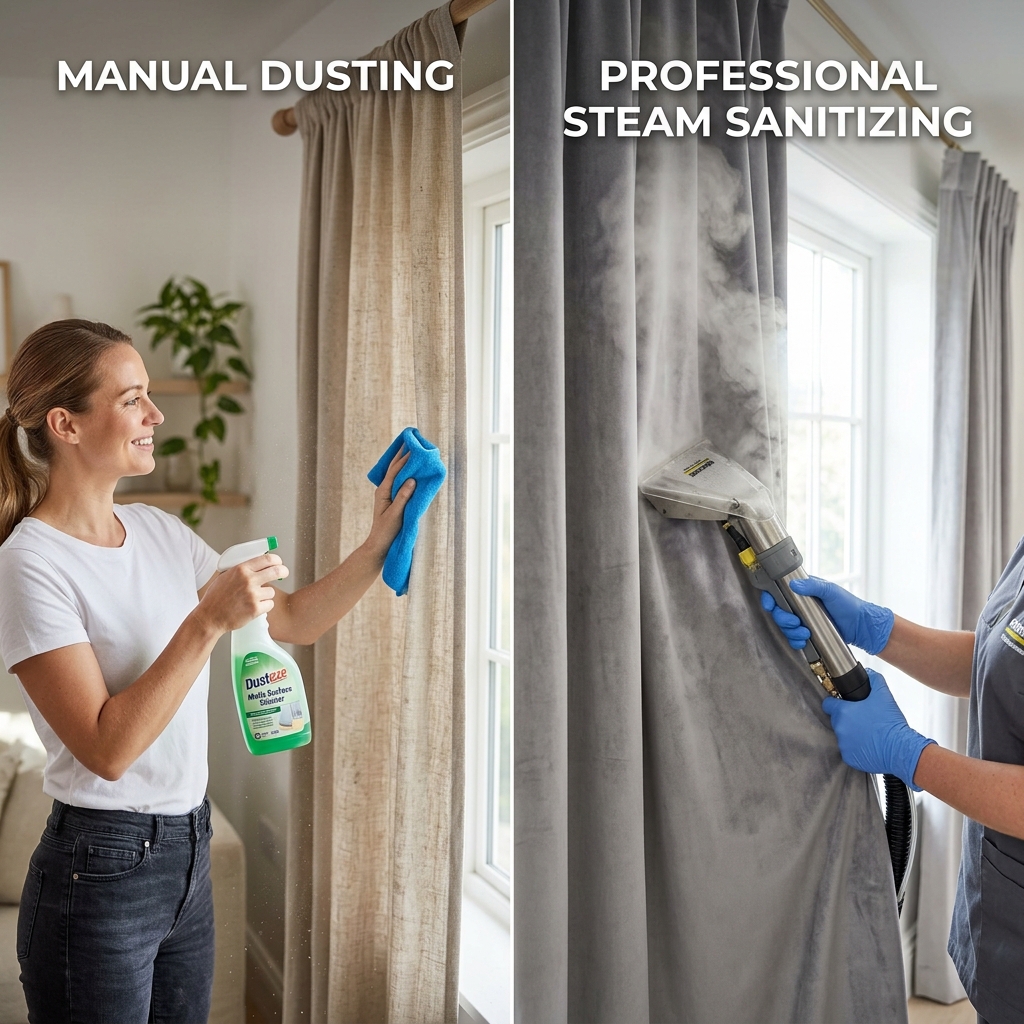
It helps to separate light maintenance from deep cleaning, because they are not substitutes for each other. Maintenance is the vacuuming and spot-checking you do yourself, and it belongs on a monthly rhythm. Deep cleaning removes what has become embedded in the weave — dust bonded to the fibres by humidity, cooking oils, dust mite waste, absorbed odour — and that needs proper equipment. Maintenance stretches the gap between deep cleans, but it never removes the need for one.
A Sensible Baseline for the Average Home
For a typical living room or bedroom in an ordinary suburban house, a deep clean every twelve months works well, with a light vacuum every four to six weeks in between. That interval keeps soiling ahead of the point where it sets into the fibres and starts dulling the colour. Households that keep windows open year-round, or sit close to a busy road, do better on a six to nine month cycle — the pattern we see most often across our residential curtain cleaning bookings.
Kitchens and Dining Rooms Run on a Shorter Clock
Any curtain within reach of a cooktop needs more frequent attention. Airborne cooking oil is the culprit: it lands as a fine, sticky film that grabs passing dust and holds it, and once oxidised it darkens the fabric in a way vacuuming will never touch. Kitchen and dining curtains usually want a deep clean every six months, and in a household that cooks with oil most nights, every four is not excessive.
Bedrooms, Nurseries and Studies
Bedrooms generate a surprising amount of what curtains end up holding — skin cells, hair, and the humidity of eight hours of breathing in a closed room. That is precisely what dust mites need to thrive. In a nursery, or a bedroom used by someone who regularly wakes up congested, tightening the interval to six months makes a noticeable difference to how the room feels in the morning.
Pets Change the Maths
Dander is fine enough to stay airborne for hours and settles readily into vertical fabric, while hair works into the weave and mats there. Cats in particular treat curtains as furniture. Homes with indoor animals need a deep clean every six months, and a check for the sour note that signals absorbed odour is worth the minute it takes — caught early, it is a straightforward stain and odour removal job rather than a fabric replacement.
Allergies and Asthma Shorten Every Interval
If someone in the house has asthma, hay fever or a dust mite allergy, treat curtains as bedding rather than decor. Six months is the sensible outer limit, and three to four is better for the room they sleep in. High-temperature curtain steam cleaning matters here, because heat deals with mites and the protein residues they leave behind, which a vacuum simply redistributes.
Your Street Matters as Much as Your Rooms
Homes on arterial roads collect brake dust and diesel particulate, which is oily, dark and unusually persistent. Coastal homes deal with salt-laden air that leaves fibres faintly tacky, and a construction site down the road can put more grit into a curtain in three months than a quiet street manages in three years. If any of that describes where you live, halve whatever interval you had in mind.
What the Fabric Will Tolerate
Frequency is also limited by what the material can take. Heavy velvets, silks and interlined panels should not go through frequent wet processes, so they are cleaned less often and more carefully — which is why formal drapery cleaning is treated as its own discipline. Polyester sheers, by contrast, are robust and can be freshened more often. Knowing which camp your curtains fall into stops you cleaning delicate fabric to death in the name of hygiene.
Offices, Clinics and Short-Stay Properties
Commercial spaces work to a different standard, because the fabric is seen by clients and the traffic is far higher than any home. Most offices land on a six-monthly cycle and healthcare settings on a quarterly one, which is why commercial curtain cleaning is normally set up as a standing program rather than booked ad hoc.
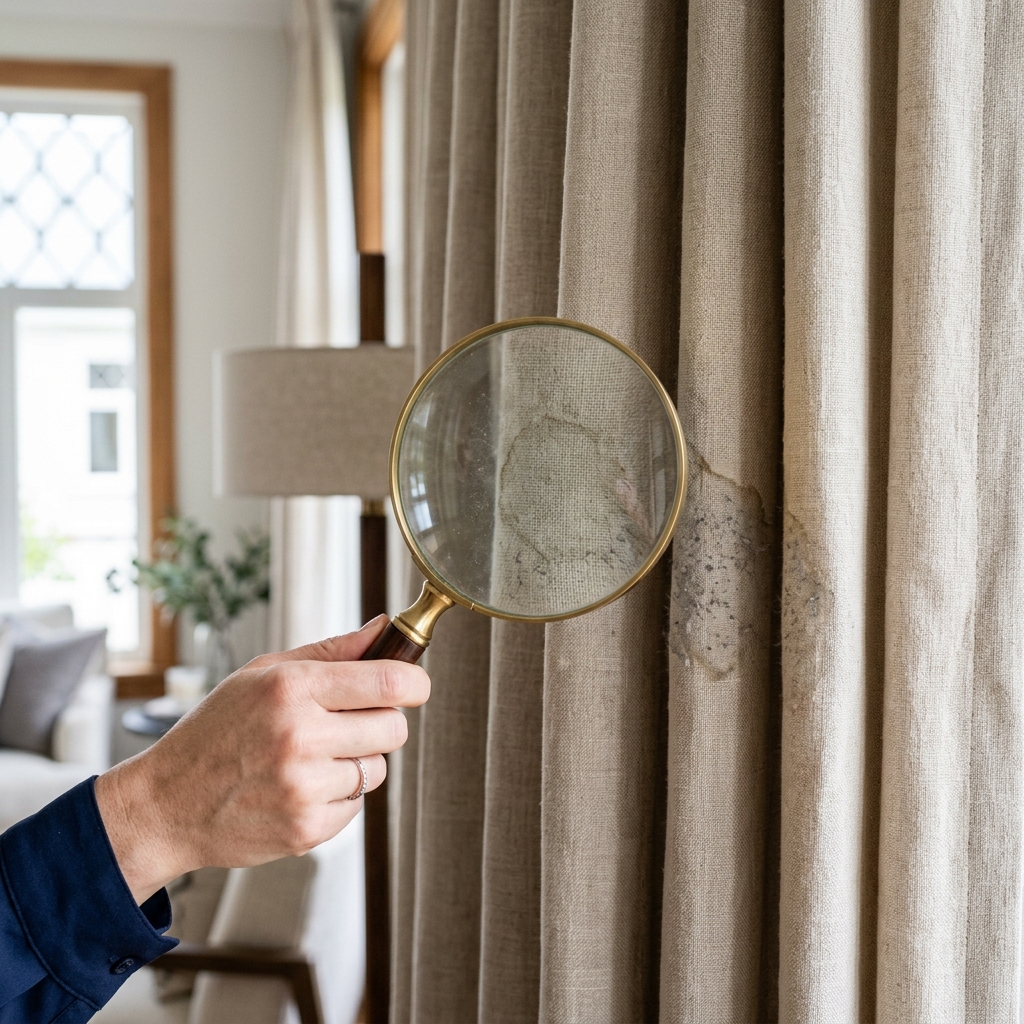
The Signs You Have Left It Too Long
- A visible plume of dust when you draw the curtains in the morning.
- A grey cast that only shows when the sun hits the fabric directly.
- A stale note in the room that returns within a day of airing it out.
- Hems that feel stiff or slightly gritty between your fingers.
- A darker tide line along the lining edge or the bottom fold.
Building a Schedule You Will Actually Keep
The interval that works is the one you remember. Pin the deep clean to something you already do — the change of season, the week before Christmas — and handle the whole house at once rather than a room at a time, since a full-home visit costs less per panel than repeated single-window callouts. Between visits, a vacuum with the upholstery head while you are already doing the floors adds a couple of minutes and buys months of extra life.
The Bottom Line
Once a year is a fair default for an average room, six months if you cook a lot, keep pets or live somewhere dusty, and three to four months if allergies are in play. If you are unsure where your curtains sit, the team at Fresho Curtain Cleaning can assess the fabric and give you an interval worth diarising, along with the cleaning service best matched to it.