Steam Cleaning vs Dry Cleaning: Full Comparison
Steam cleaning and dry cleaning are the two mainstream options for curtains, and they are not simply cheaper and dearer versions of the same thing. They rely on different chemistry, remove different kinds of soil, and carry different risks. Choosing between them properly means matching the method to your fabric and to the problem you are actually trying to solve.
How Steam Cleaning Works
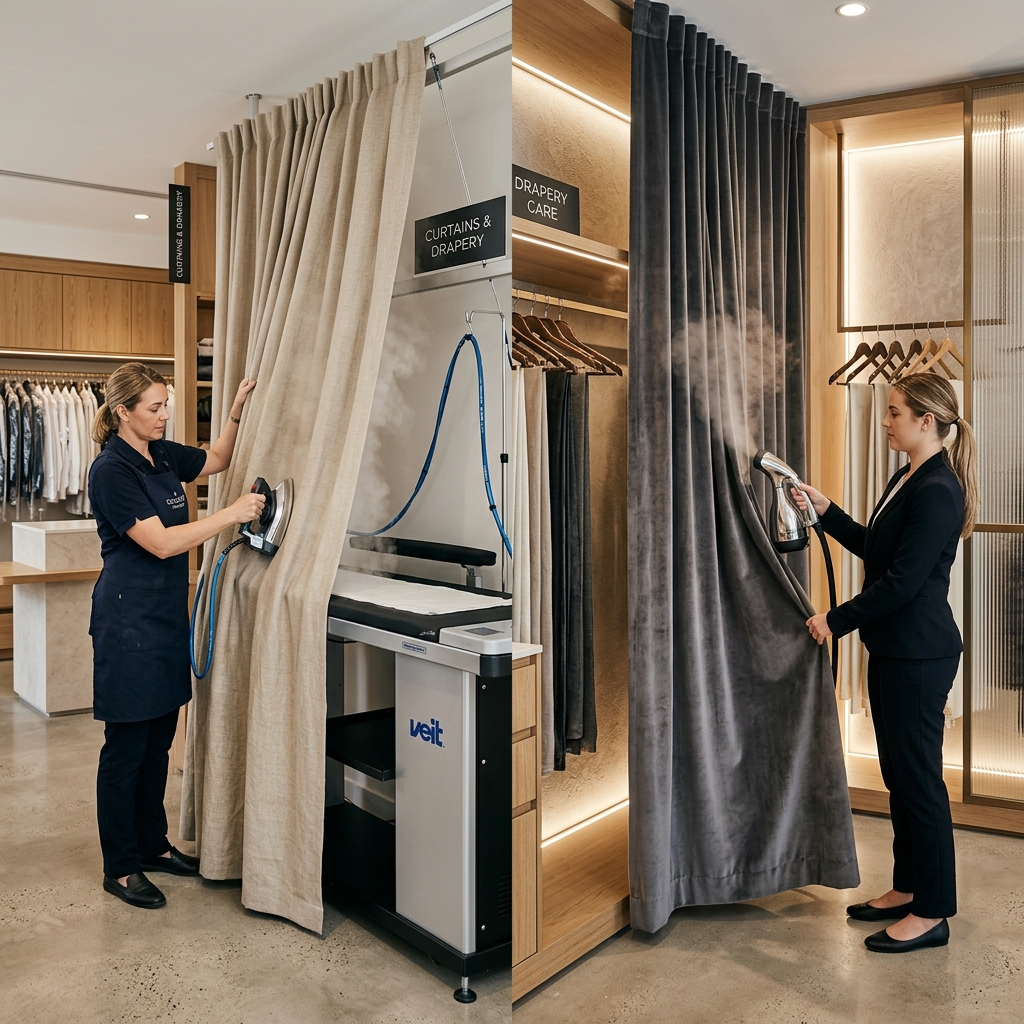
Steam cleaning applies water heated well past boiling as a controlled vapour, usually alongside a pre-treatment detergent, then extracts the moisture and suspended soil straight back out with vacuum. The heat softens and dissolves water-soluble soil, relaxes the fibre so trapped particles release, and deals with dust mites and bacteria through temperature rather than chemistry. The critical part is the extraction: it is what stops the fabric becoming saturated and what carries the loosened soil away rather than redistributing it.
How Dry Cleaning Works
Dry cleaning is not dry — it simply uses no water. Panels are immersed in a chemical solvent that dissolves oils, waxes and greases without swelling the fibre, agitated gently, then the solvent is spun out and recovered. Because the fibre never absorbs water, it never swells, and without swelling there is very little scope for shrinkage. The trade-off is that solvents are poor at water-soluble soils — sugar, salt, perspiration, many food and drink spills — which is why marks can survive a dry clean intact.
Which Removes More Soil
It depends entirely on the soil. Steam is stronger on general household grime, dust, pollen, dust mite residue and water-based staining, and it reaches deeper because heat and moisture open the fibre. Solvent is stronger on oil-based soiling — kitchen grease films, wax, cosmetics, some inks. In a normal house the soil load is predominantly water-soluble and particulate, which is why steam is the usual recommendation and dry cleaning is reserved for specific fabrics and specific problems.
Shrinkage and Fabric Risk
Dry cleaning has the clear advantage on dimensional stability, since without water there is no relaxation shrinkage and no risk of a cotton lining pulling up behind a polyester face. Steam does introduce moisture, so on cotton, linen, viscose or wool the process has to be controlled and the panel kept hanging under its own weight. Done properly, with regulated moisture and immediate extraction, steam is safe on most curtains — but the operator needs to know what they are working with. Solvent has its own risks too: it can attack certain glues, coatings, sequins and trims that water leaves alone.
Dealing With Odour
This is where steam usually wins outright. Smoke, cooking, pet and damp odours are caused by compounds absorbed into the fibre, and heat plus moisture plus extraction flushes them out. Solvent removes oil-bound odour well but leaves water-soluble compounds behind, and it introduces a faint chemical smell of its own that takes days to dissipate. For a room that smells stale rather than looks dirty, steam cleaning is almost always the better answer.
Allergies and Sanitisation
For allergy-affected households the comparison is not close. Steam reaches temperatures that kill dust mites and denature the protein residues that actually trigger reactions, and extraction physically removes them from the fabric. Dry cleaning removes some allergen load mechanically but does not sanitise in the same way, and it leaves a solvent residue that a small number of people find irritating in itself.
Convenience and Downtime
Steam cleaning is normally done onsite with the curtains still hanging. Nothing is taken down, nothing leaves the house, and panels are typically dry within a few hours. Dry cleaning requires take-down, transport, processing and rehanging, so the window sits bare for days and there are two appointments to coordinate. For most households that difference in disruption matters as much as the cleaning result.
Cost and Environmental Considerations
Steam is generally the more economical option per panel, largely because there is no transport or double handling, and it uses water and heat rather than chemical solvents that require licensed handling and disposal. Traditional solvents also off-gas from the fabric for a period after cleaning. Where a fabric genuinely demands solvent there is no substitute, but choosing it by default when steam would do adds cost and chemical load for no gain.
Matching Method to Fabric
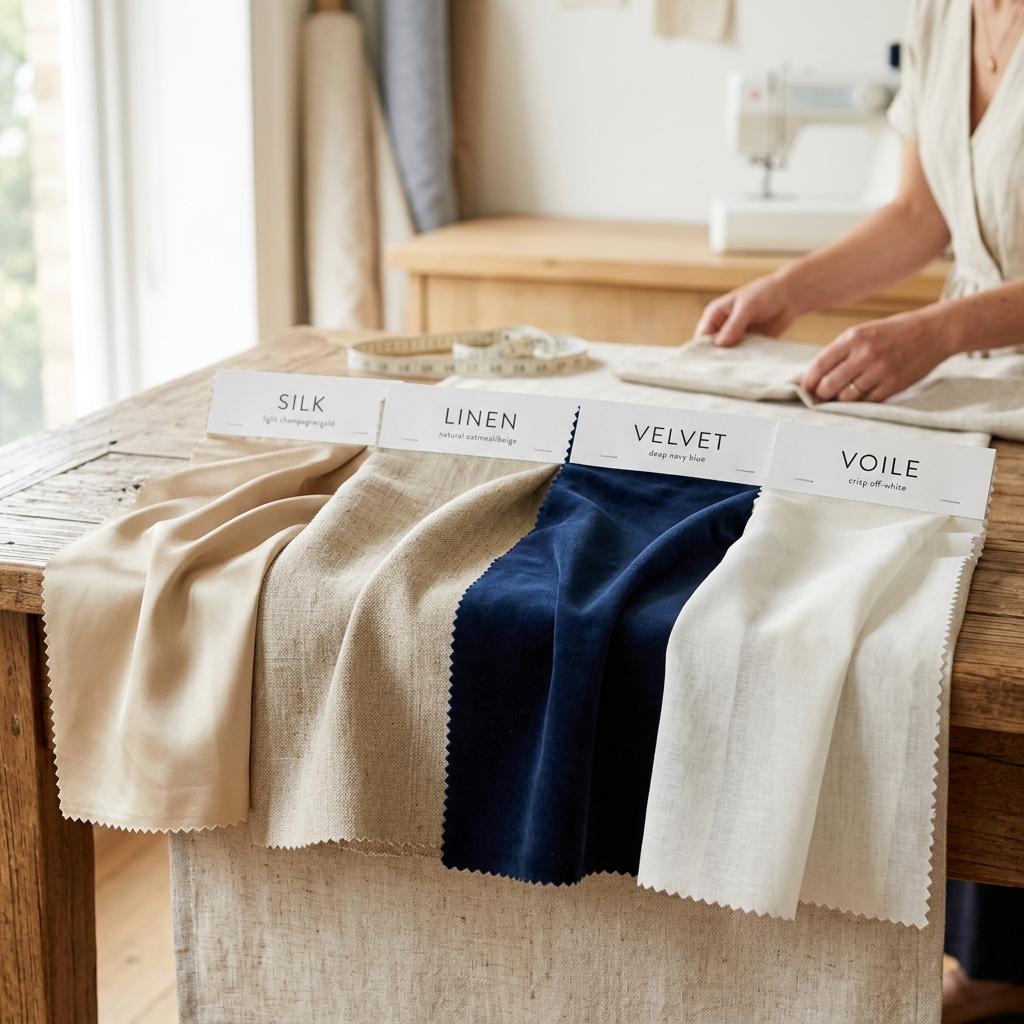
- Polyester and synthetic blends: steam, comfortably.
- Cotton and linen: steam with controlled moisture, or solvent if the drop is critical.
- Blockout and thermal coated: steam onsite, kept off the coated face.
- Sheers and voiles: steam, or a gentle cold wash where unlined and uncoated.
- Silk, wool, velvet and interlined drapes: normally solvent, or steam only in expert hands.
- Beaded, embroidered or heavily trimmed panels: assess individually — either method can cause damage.
When Both Methods Get Used
Some houses are not a single answer. A living room with heavy silk drapes and a kitchen with polyester panels calls for different treatment in each room, and the right approach is to split the job rather than force one method across the house. Heavier formal panels are often handled as specialist drapery cleaning while everything else is steamed in place on the same visit.
Choosing With Confidence
Steam is the right default for the great majority of household curtains: better on the soil most homes actually produce, better on odour and allergens, and far less disruptive. Dry cleaning earns its place on delicate natural fibres, structured formal drapery and oil-based problems. If your care label is missing or ambiguous, an assessment from Fresho Curtain Cleaning will identify the fibre and the safe method before any decision is made, and our service options cover both routes.